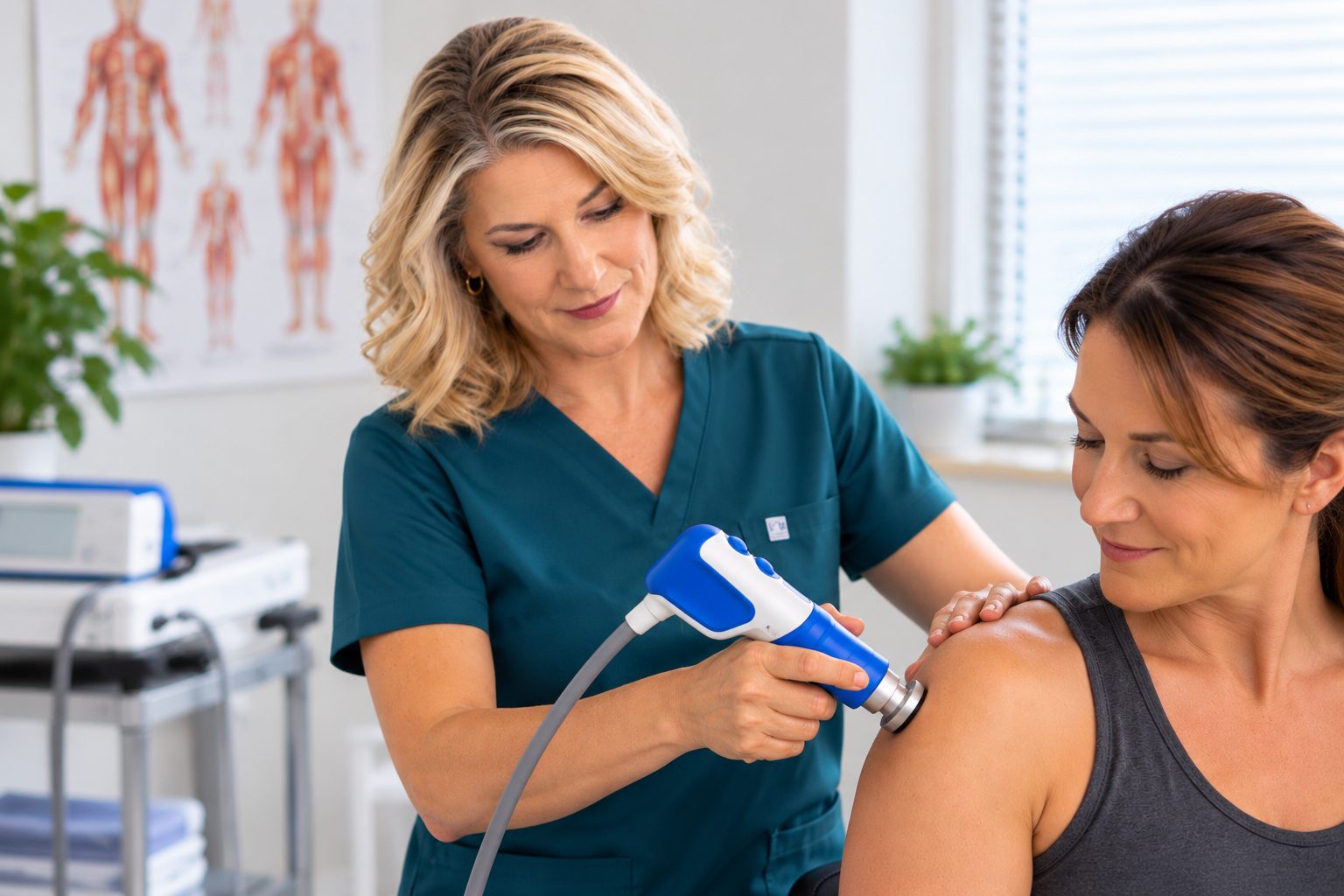
Radial Shockwave Therapy (RSWT) offers another approach.
At our practice, we use the EMS Swiss DolorClast® Smart20, a high-energy radial Shockwave system designed for musculoskeletal conditions.
What is Radial Shockwave Therapy?
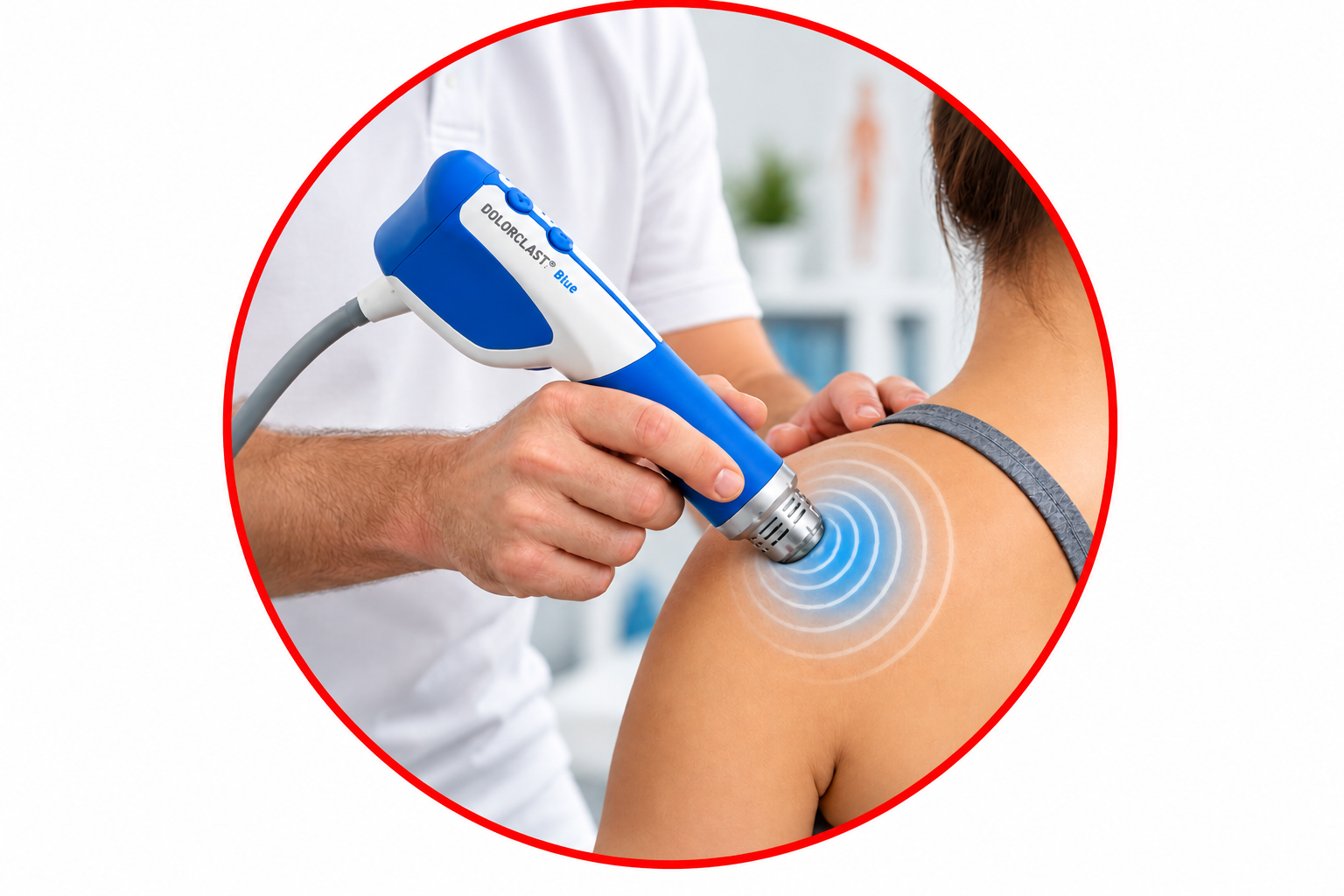
Shockwave Therapy is a non-invasive treatment that uses acoustic waves delivered through the skin to a specific area of pain or injury.
The Swiss DolorClast® Smart20 generates radial shockwaves using compressed air. The energy is transferred through the treatment applicator into the tissues, producing a mechanical stimulus.
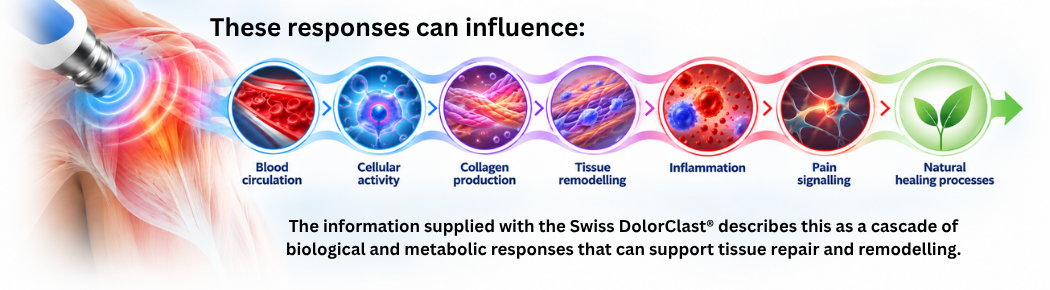
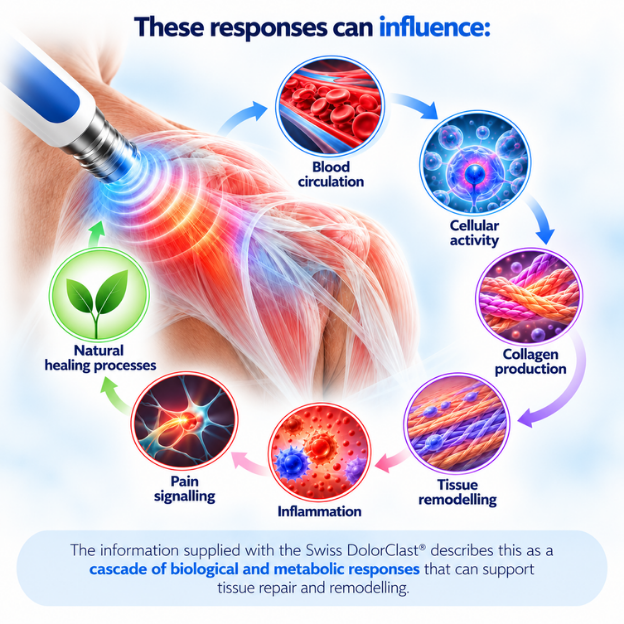
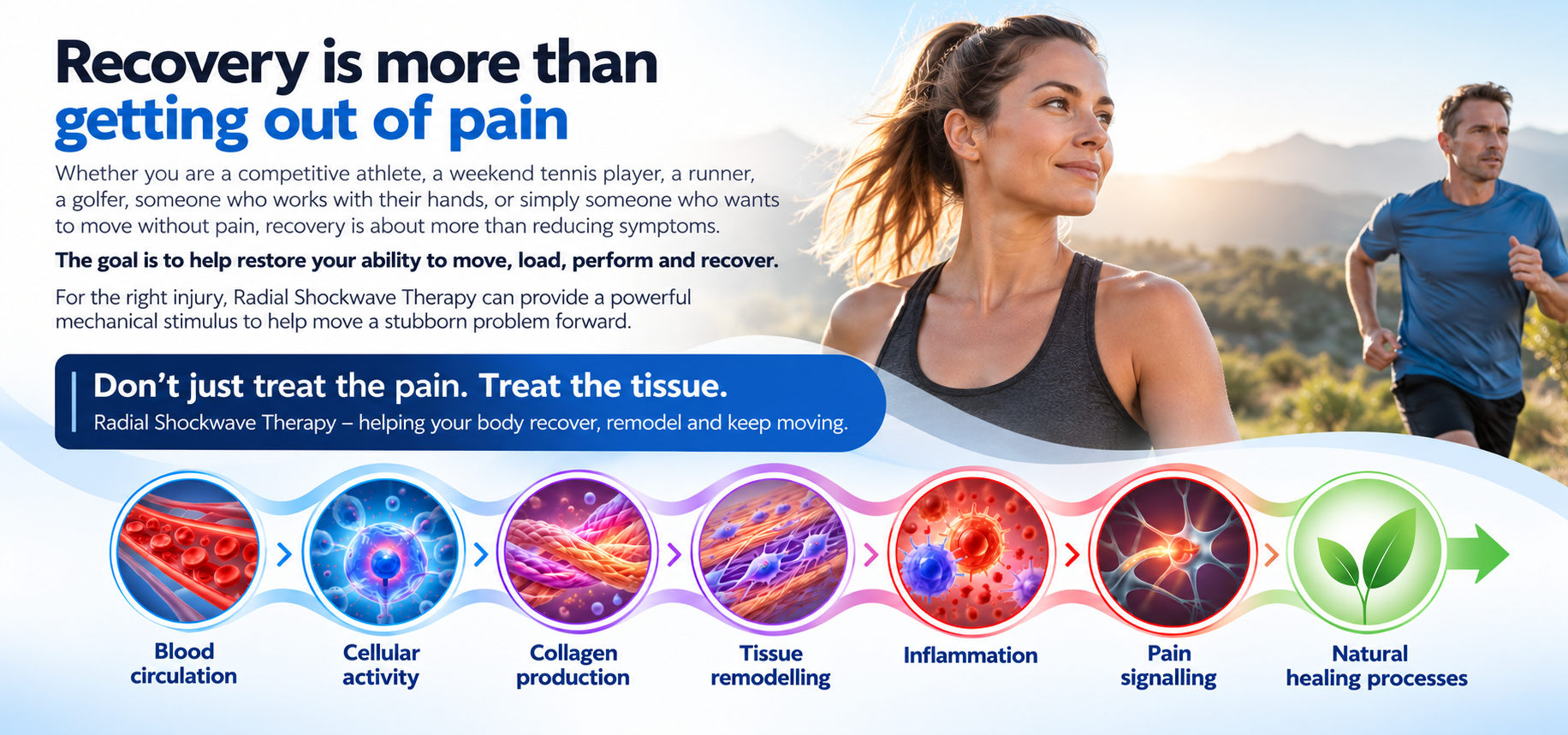
This mechanical stimulus triggers a process called mechanotransduction. In simple terms, the cells in your tissues respond to the mechanical energy by initiating a series of biological responses.
In simple terms
Shockwave delivers energy → the tissue responds → biological activity increases → the body's repair and remodelling processes are stimulated.
This is what makes Shockwave different from simply taking medication to control pain.
Frequently Asked Questions
What can Shockwave Therapy treat?
Some of the conditions we commonly consider for Shockwave Therapy include:
Tennis elbow | Frozen shoulder | Golfer's elbow | Plantar fasciitis / plantar fasciopathy
Achilles tendinopathy | Patellar tendinopathy / jumper's knee | Rotator cuff and shoulder tendon problems | Calcific shoulder tendinopathy
Selected cases of osteoarthritis | Selected cases of carpal tunnel syndrome | Gluteal tendinopathy | Hamstring and other sports injuries
Myofascial pain and trigger points | Persistent muscle injuries | Painful tendon attachments | Posterior knee injuries / popliteal fossa
Hip and knee pain | Delayed or non-healing bone injuries or bone marrow oedema
These indications are consistent with the conditions described in the Swiss DolorClast® information supplied for the therapy.
However, not every injury is suitable for Shockwave, which is why an appropriate assessment is important before treatment.
Why is Shockwave useful for stubborn injuries?
Shockwave provides a strong mechanical stimulus to the affected area and aims to support the body's natural response.
It can help to:
Reduce pain
Shockwave can influence pain signalling and reduce the sensitivity of pain receptors. One of the mechanisms described by EMS is a reduction in Substance P, which is involved in pain signalling and neurogenic inflammation.
Improve circulation
Shockwave can stimulate vascular activity and local blood flow, helping create a more favourable environment for tissue recovery.
Stimulate tissue repair
The mechanical stimulus can activate cellular processes involved in tissue repair, including collagen production and tissue remodelling.
Improve tissue quality
The objective is not simply to make an area hurt less. The longer-term goal is to help the affected tissue recover, remodel and tolerate normal movement and loading again.
Why is Shockwave particularly useful for athletes?
The goal is not simply to reduce pain temporarily. The aim is to help the injured tissue recover sufficiently to allow a structured rehabilitation programme and progressive return to sport.
Shockwave can be incorporated alongside appropriate strengthening, mobility and functional rehabilitation. This can be particularly valuable for stubborn tendon and muscle injuries that have previously taken a long time to settle.
The goal is:
Reduce pain → improve tissue function → rehabilitate → progressively return to sport.
The exact rehabilitation programme depends on the injury and the individual patient.
What does the treatment feel like?
A coupling gel is applied to allow the shockwaves to pass efficiently into the tissue. The applicator is then placed against the skin and the shockwaves are delivered to the affected area.
You will hear the machine working and feel the pulses during treatment. Some areas can be more sensitive than others.
The intensity can be adjusted according to the condition and your tolerance.
Shockwave treatment is non-invasive and does not require injections or surgery.
How long does a treatment take?
Treatment is usually performed as a course rather than as a single session.
Depending on the condition, a course may consist of approximately 3–7 treatments, usually spaced about a week apart. Some conditions, such as plantar fasciopathy, are commonly treated with 3–5 weekly sessions.
The exact number of treatments is determined according to your condition and your response to treatment.
What can Shockwave Therapy treat?
Some of the conditions we commonly consider for Shockwave Therapy include:
Tennis elbow | Frozen shoulder | Golfer's elbow | Plantar fasciitis / plantar fasciopathy
Achilles tendinopathy | Patellar tendinopathy / jumper's knee | Rotator cuff and shoulder tendon problems | Calcific shoulder tendinopathy
Selected cases of osteoarthritis | Selected cases of carpal tunnel syndrome | Gluteal tendinopathy | Hamstring and other sports injuries
Myofascial pain and trigger points | Persistent muscle injuries | Painful tendon attachments | Posterior knee injuries / popliteal fossa
Hip and knee pain | Delayed or non-healing bone injuries or bone marrow oedema
These indications are consistent with the conditions described in the Swiss DolorClast® information supplied for the therapy.
However, not every injury is suitable for Shockwave, which is why an appropriate assessment is important before treatment.
What happens after treatment?
For this reason, we recommend avoiding strenuous or high-impact activity that significantly stresses the treated area for approximately 24–48 hours after treatment, particularly during the early stages of the treatment course.
Gentle movement is generally encouraged, and your rehabilitation programme can be progressed as the tissue improves.
Short-term and long-term results
Short term
Some patients notice a reduction in pain relatively quickly. This can make movement easier and allow rehabilitation to progress.
Long term
The biological response continues beyond the treatment itself. The aim is to stimulate:
Tissue remodelling | Collagen production | Improved circulation | Improved tissue capacity | Better movement and function | Progressive return to normal activity
This means that improvement can continue for weeks or months after the treatment course has finished.
Rapid pain relief does not necessarily mean that the tissue has already healed. Longer-term improvement and improved function are much more meaningful indicators of recovery.
Shockwave is more than pain relief
The aim is to provide the tissue with a strong mechanical stimulus that encourages the body's own repair and remodelling processes.
Think of it as giving the body a signal:
"This area needs to repair, remodel and become stronger."
For the right patient, this can be particularly valuable when an injury has become chronic, stubborn or slow to heal.
Shockwave is more than pain relief
The aim is to provide the tissue with a strong mechanical stimulus that encourages the body's own repair and remodelling processes.
Think of it as giving the body a signal:
"This area needs to repair, remodel and become stronger."
For the right patient, this can be particularly valuable when an injury has become chronic, stubborn or slow to heal.
Is Shockwave Therapy safe?
Temporary soreness, discomfort, redness, mild swelling or small areas of bruising can occur after treatment. These effects are generally short-lived; EMS reports that typical device-related effects usually resolve within approximately 36 hours.
However, Shockwave is not appropriate for every condition or every patient. A proper assessment is therefore performed before treatment to determine whether it is suitable for you.
 .
.